
Food delivery isn’t a trend anymore. It’s a daily expectation. For architects and property managers designing modern high-rise buildings, thoughtful lobby planning can dramatically improve security, reduce clutter, and create a seamless experience for tenants and delivery drivers alike.
At Minnow, we’ve installed smart food lockers in hundreds of lobbies across multifamily, commercial, and hospitality properties. Along the way, we’ve learned what works and what doesn’t. Here’s our guide to getting it right from day one.
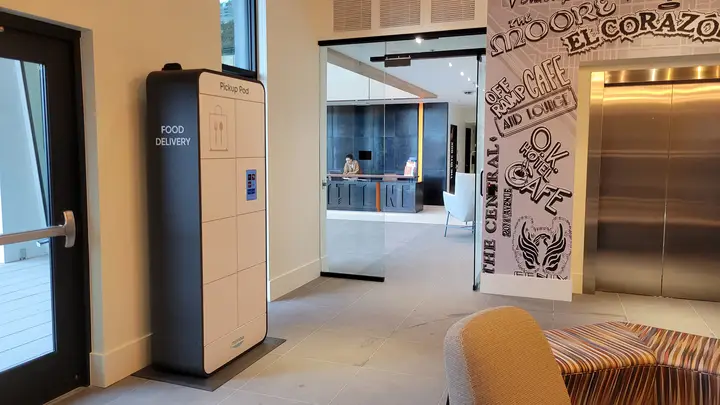
The most important decision? Where your smart food locker lives.
Here’s the reality: food delivery drivers are incentivized to work quickly. If your Pod isn’t easy to find, they’ll leave the food on the first horizontal surface they come to. The deeper the Pod is inside the building, the less likely they are to find and use it. Don’t make them hunt for it.
And if your property isn’t staffed 24/7, there will be times when no one is available to help delivery workers find the Pod. That’s why it must be in an obvious location.
Ideally, that means placing your Minnow Pod:
The data backs this up: One property that moved their Minnow Pod to an optimal lobby location saw a 30% increase in Pod utilization. Placement matters.
For properties focused on high-end aesthetics, Minnow Pods can be custom wrapped to complement your interior design. This allows architects to specify a premium, visible location without compromising the visual integrity of the space.
Design tip: Treat your smart food locker like an intentional amenity, not an afterthought. The best installations feel like they belong.
Even with optimal placement, clear signage reinforces the experience.
Incorporate subtle but visible lobby signage that directs drivers to the food locker. Consider:
The goal is simple: drivers should never have to ask where to place food. Clear wayfinding reduces confusion, prevents misplaced orders, and keeps the front desk focused on tenants rather than delivery coordination.
Modern high-rises often emphasize clean lines and open space. This design philosophy directly supports better delivery flow.
One of the most effective ways to prevent food from being left on random surfaces is surprisingly simple: minimize tables, shelves, and furniture near the entrance.
When convenient flat surfaces exist, drivers will naturally use them. By reducing “tempting drop zones,” you encourage proper food locker usage, prevent clutter buildup, and maintain a polished lobby aesthetic.
A sleek, thoughtfully curated space subtly guides behavior without the need for constant enforcement. Good design does the heavy lifting.
Security and convenience should work together.
Ensuring elevators require key fob or badge access prevents delivery drivers from going upstairs. This protects tenant privacy, enhances overall building security, and reinforces the smart food locker as the designated delivery destination.
When elevator access is restricted, the Minnow Pod becomes the clear and obvious endpoint for every delivery. It eliminates confusion and reduces liability.
Food delivery isn’t going anywhere. By incorporating smart food locker best practices early in the design phase, architects and property managers can:
A well-designed lobby doesn’t just look great. It works beautifully.
Not sure where to place your Minnow Pod? Our Customer Success team has helped hundreds of properties find the optimal location. Reach out and we’ll help you get it right.
Install your smart food locker within clear line of sight from the main entrance, along a natural walking path that delivery drivers can find immediately. The location should be visible without requiring drivers to ask for directions. If delivery workers use more than one entrance, place the Pod where it can be easily seen from the concierge or security desk.
Yes. Even with optimal placement, clear wayfinding signage reinforces the experience. Consider entrance decals, wall-mounted directional signs, or floor markers in larger lobbies so drivers never have to ask where to place food.
Absolutely. Minnow Pods can be custom wrapped to complement your interior design, allowing architects to specify a premium, visible location without compromising the visual integrity of the space.
Yes. In one case study, a property that moved their Minnow Pod to an optimal lobby location saw a 30% increase in Pod utilization. Placement directly impacts adoption and usage.
If you’re currently designing a new high-rise or repositioning an existing property, we’d love to collaborate early in the process to help you create a seamless delivery experience from day one.

Andrew is the Director of Customer Success at Minnow, where he partners closely with property managers, developers, and operators to modernize the way food delivery is handled in high-rises across the United States and Canada. He leads onboarding, support, and expansion efforts, helping customers get the most out of their Minnow Pods while improving the overall user experience. Andrew is passionate about solving everyday operational challenges through thoughtful, practical technology solutions.